
10 Worst NFL Coach Firings That Still Make No Sense
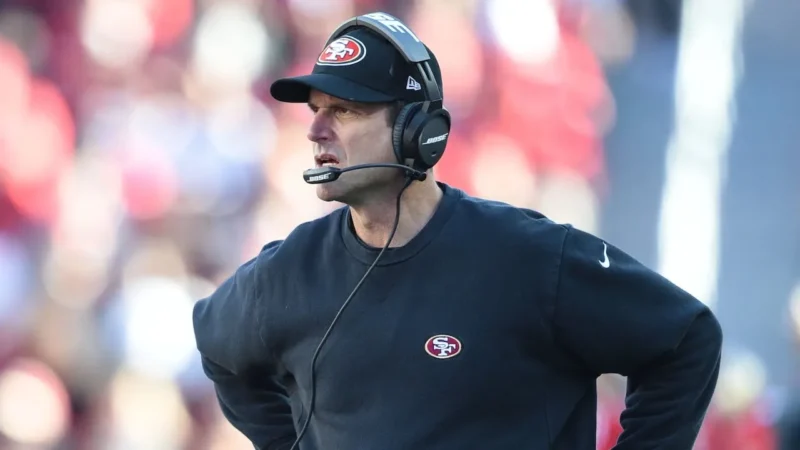
Playing in the NFL is hard, but there is a serious argument to be made that being a successful head coach in the league is an even steeper challenge. Not only do you have to operate as the CEO of a highly publicized company effectively, but you also have to manage dozens of professional athletes while deploying a successful strategy on offense and defense. To say that it takes a whole lot to get it right is a massive understatement. So, when you find the right guy, it is pivotal to keep him in town no matter what, but NFL owners are impatient. Sometimes they get an itch to make a rogue move, thinking that the team has plateaued and perhaps the grass is greener on the other side—only to realize in short order that they have made a terrible mistake. Let’s take a look back at the 10 WORST Head Coach firings in NFL history that tanked the organizations that let their guy go! Which coaches were unceremoniously fired in the NFL? Bill Belichick, Cleveland Browns/Baltimore RavensJan 1, 1995; Cleveland, OH, USA; FILE PHOTO; Cleveland Browns head coach Bill Belichick prior to the 1994 Wild Card Playoff Game against the New England Patriots at Cleveland Stadium. Mandatory Credit: Photo By USA TODAY Sports © Copyright USA TODAY Sports It’s funny how history rewrites itself. Aside from the whole UNC mess… Today, Bill Belichick is widely regarded as one of the greatest coaches in NFL history… In the 2000’s he became a six-time Super Bowl champ and a feared mastermind that made opposing coaches overthink every last decision. He was essentially the hooded overlord of football’s modern dynasty, but back in Cleveland in the mid-’90s, he was the guy that the Browns handed a pink slip to. Belichick took over a dysfunctional Browns team in 1991—and while his approach wasn’t warm and fuzzy, it was effective at turning things around. The Browns went 11-5 in 1994 and won a playoff game—their only postseason win since the 1980s. But by 1995, the walls were closing in… Modell announced he was moving the franchise to Baltimore, chaos swallowed the season, and Belichick was a casualty in the process. Who knows—maybe if they brought BB along for the ride, they would have been the 2000s dynasty—not the Pats! George Allen, Washington RedskinsSep 16, 1973; Washington, DC, USA; FILE PHOTO; Washington Redskins head coach George Allen on the sidelines during the 1973 season. Mandatory Credit: Photo By Malcolm Emmons-USA TODAY Sports © Copyright Malcolm Emmons If you were to make a list of the most innovative minds in NFL history, George Allen would be somewhere near the top; thus, his exit from Washington in 1977 is one of those classic “what were they thinking?” moments. In his seven seasons with the Redskins, he went 67-30-1, made the playoffs five times, never had a losing season, and won the NFC title in 1972. He built the “Over-the-Hill Gang,” a roster of savvy veterans who outsmarted younger teams every Sunday, and he revolutionised how special teams were coached and valued. Allen was obsessed with preparation—film study, substitutions, clock control—all things that are normal now because he made them normal. Allen reportedly turned down a four-year, $1 million contract extension because he didn’t like ownership’s new demands, and the team promptly showed him the door. Imagine firing a guy who had literally never had a losing season and replacing him with one of his favorite players in Jack Pardee… brutal. Washington ended up sinking into a three-year period of pure mediocrity under Pardee with an even .500 record during his tenure, and they never hit the same heights as they did with Allen until years later, when Joe Gibbs was brought into the fold. Marty Schottenheimer, San Diego ChargersSept. 17, 2006; San Diego, CA, USA; San Diego Chargers head coach Marty Schottenheimer against the Tennessee Titans at Qualcomm Stadium in San Diego, CA. Mandatory Credit: Mark J. Rebilas-USA TODAY Sports © 2006 Mark J. Rebilas This one still stings, even 18 years later. Marty Schottenheimer went 14-2 with the 2006 Chargers — the best regular-season record in franchise history. LaDainian Tomlinson won MVP, Philip Rivers had taken the baton from Drew Brees—and then some, frankly, the team was loaded across the board. Then came the playoff loss to New England, and within a few weeks, Marty was fired over front office tension with GM A.J. Smith. Think about that. A 14-2 coach was shown the door because of office politics. Yes, the playoff loss was a factor… but even the stated reason was “philosophical differences,” but let’s be real, it was an ego collision. And ownership picked the wrong side. People criticised his 5-13 playoff record, but postseason heartbreak doesn’t make a coach bad, especially not when the team continued to suffer untimely injuries, which makes him unlucky. The Chargers didn’t just fire an NFL coach; they fired a culture that prioritized accountability over flash—and, honestly, fans have ownership to blame for never fully capitalizing on all of that mid-2000s talent and bringing home a Super Bowl like many expected them to. George Seifert, San Francisco 49ersJan 29, 1995; Miami, FL, USA; FILE PHOTO; San Francisco 49ers head coach George Seifert on the field prior to Super Bowl XXIX against the San Diego Chargers at Joe Robbie Stadium. The 49ers defeated the Chargers 49-26. Mandatory Credit: RVR Photos-USA TODAY NETWORK If you want a coaching tenure that basically reads like perfection on paper, Seifert delivers. He turned around the San Francisco 49ers in 1989, posting a remarkable 98-30 regular season record over eight seasons, won two Super Bowls, and had the best winning percentage in the NFL at his departure. But then came 1996, where the 49ers ended up going 12 and 4, but were eliminated in the divisional round again by the Green Bay Packers. Instead of another shot at building on that success, he was quietly ushered out. His “resignation” or firing, depending on how honestly you look at it, came because ownership—led by Eddie DeBartolo Jr.—had unrealistic expectations that went beyond regular-season domination… They needed Super Bowl wins every year. When they didn’t get it, they pulled the plug. This, of course, led to some dark days under Steve Mariucci in the Bay Area… The 49ers maintained Seifert’s standards in year 1, going 13 and 3, but fell off a cliff the following year going 4 and 12—and quickly faded into irrelevance way beneath Bartolo’s standards! Jim Harbaugh, San Francisco 49ersJanuary 7, 2011; San Francisco, CA, USA; Jim Harbaugh addresses the media during a press conference after being announced the new head coach of the San Francisco 49ers at the Palace Hotel. Mandatory Credit: Kyle Terada-USA TODAY Sports The 49ers and Jim Harbaugh were like an elite rock band that was super fun to watch on the come-up, but imploded at its peak. From 2011 to 2014, they went 44-19-1, reached three NFC Championships, and came within five yards of capturing a Lombardi Trophy. Then, after one bumpy 8-8 year, which seemingly unearthed years of growing tension with General Manager, Trent Baalke, they “mutually parted ways.” If you are looking for a clean way to sum it up… Basically… Baalke got his feelings hurt because Harbaugh didn’t treat him with kid gloves, so he rashly decided to fire the guy who turned them from 6-10 to perennial contenders. And, as you might’ve expected, the post-Harbaugh years were a disaster. Jim Tomsula and Chip Kelly, both gone within a single season, put up a 7- 25 record, which is simply horrendous. The 49ers didn’t stabilize again until Kyle Shanahan arrived in 2017, which, unsurprisingly, coincided with Baalke’s unceremonious departure from the organization. I understand that Harbaugh’s intensity wore people out, but that’s the cost of greatness. He built that defense’s identity, amplifying the swagger of studs like Patrick Willis and NaVorro Bowman. When the dust settled, it was clear as day that Harbaugh was the straw that stirred the drink out in the Bay Area… and based on the success he had turning around the University of Michigan—and now the Los Angeles Chargers—it’s safe to say Baalke was completely misguided in giving Harbaugh a pink slip. Mike Vrabel, Tennessee TitansNov 30, 2014; Houston, TX, USA; Houston Texans linebackers coach Mike Vrabel prior to the game against the Tennessee Titans at NRG Stadium. Mandatory Credit: Matthew Emmons-USA TODAY Sports It’s rare for a coach to be proven right this quickly… Though… this was one that everyone saw the writing on the wall for. When the Titans fired Mike Vrabel in January 2024, ownership said the team “needed a new direction.” Well, that new direction has been a nosedive. Brian Callahan went 4-19 before being canned this October, and Tennessee has scored just 83 points through six games. Meanwhile, Vrabel took a year off from head coaching to do some consulting work and has since taken the job in New England with his old team, the Patriots. And, well, so far, so good! Yep, the same team that just went 4-13 last year is sitting at 5-2 partway through the 2025 season and has a hilarious 31-13 thumping of the Titans to its name. It had to feel good for Vrabel to win over his old squad after the way ownership tried to throw him under the bus. What is crazy is that he is bringing a very similar impact to New England that he did when he got to Tennessee. He’s rebuilt the defense, put an unproven quarterback in a position to succeed, and has the whole locker room buying in. What’s wild is how obvious this outcome felt. Vrabel was 54 and 45 in Tennessee with three playoff trips and a 2021 NFL Coach of the Year trophy. Fans were even willing to go to extreme lengths to have him back. The roster regressed because of personnel misses, not coaching. Yet ownership blamed the voice instead of the roster. Now, Vrabel’s thriving in Foxborough while the Titans are back in “interim” mode because they hastily showed one of the best culture-builders in the game the door. Marvin Lewis, Cincinnati BengalsCincinnati Bengals head coach Marvin Lewis instructs the defense in the first quarter of a Week 17 NFL football game against the Pittsburgh Steelers, Sunday, Dec. 30, 2018, at Heinz Field in Pittsburgh. The Cincinnati Bengals lead 10-3 at halftime. Cincinnati Bengals At Pittsburgh Steelers 12 30 2018 Syndication Cincinnati Before Marvin Lewis arrived in 2003, the Bengals were the NFL’s punchline, year in and year out. They were known as a franchise allergic to stability and addicted to mediocrity. But Lewis managed to do more than just change the team on the field; their identity evolved under his leadership. Over 16 seasons, Lewis went 131-122-3 and took Cincinnati to the postseason seven times. That’s not small potatoes when you consider the Bengals hadn’t had a winning season in over a decade before he showed up. But after the 2018 campaign, ownership decided it was time to “move on.” Translation: they were tired of losing in the Wild Card round. Sure, Lewis never won a playoff game, but he built a legitimate culture with next to no help from ownership. He had to navigate minimal free-agent spending, a revolving door of coordinators, and a notoriously old-school front office that barely believed in scouting innovation. When Lewis left, the Bengals got exactly what they asked for: a reset. Unfortunately, that reset meant a two-year stretch of absolute irrelevance before Joe Burrow came to town. Mike Shanahan, Washington RedskinsDec 29, 2013; East Rutherford, NJ, USA; Washington Redskins head coach Mike Shanahan walks off the field after a game against the New York Giants at MetLife Stadium. The Giants defeated the Redskins 20-6. Mandatory Credit: Brad Penner-USA TODAY Sports If you were making a Mount Rushmore of bad NFL owners, Dan Snyder would be carved right in the middle. Few people in football history have burned through more competent personnel than Snyder, and Mike Shanahan, widely regarded as one of the best coaching minds in NFL history, was one of his biggest casualties. When Shanahan took over in Washington back in 2010, the franchise was already a full-blown fixer-upper. Years of Dan Snyder meddling had left the roster top-heavy, the locker room fractured, and the fan base numb to disappointment. It wasn’t exactly the kind of place that even a two-time Super Bowl champion could walk into and instantly win. But Shanahan wasn’t looking for a quick fix — he was trying to rebuild a culture. But Shanahan quietly did what he always did best: found talent where nobody else was looking. A sixth-round pick named Alfred Morris became a 1,600-yard rusher in 2012, and that same year, Washington drafted Robert Griffin III and went 10- 6, winning the NFC East for the first time in over a decade. It felt like the corner had finally been turned. Then came the injuries… and the interference. RG3’s knee exploded in that playoff loss, and Snyder, instead of letting his coach manage the recovery, turned the situation into a circus. By the end of 2013, the relationship between owner and coach had completely unraveled, forcing Shanahan out of town—and Washington back into the cellar. Jimmy Johnson, Dallas CowboysOct 16, 2023; Inglewood, California, USA; Jimmy Johnson attends the game between the Los Angeles Chargers and the Dallas Cowboys at SoFi Stadium. Mandatory Credit: Kirby Lee-USA TODAY Sports This one is the gold standard of disastrous divorces. Two Super Bowl titles. Back-to-back. A complete franchise turnaround from 1-15 laughingstock to full-blown dynasty — and somehow, it still ended with the head coach walking away because the owner, Jerry Jones, couldn’t share credit. When Jimmy Johnson arrived in Dallas in 1989, the Cowboys were broken. The roster was depleted, culture was nonexistent, and Tom Landry’s long shadow still hung over everything. Johnson tore it all down and rebuilt it through the draft, By 1993, Dallas was a juggernaut. Faster, tougher, and better than anyone else in the league. Then came the ego war. Jerry Jones started taking public credit for the team’s rise, calling himself the architect. Johnson pushed back — and just weeks after winning a second straight Lombardi, the two split. Jones spun it as “mutual,” but it was anything but. Yes, the Cowboys won another Super Bowl the next year under Barry Switzer, but let’s be real—that was still Jimmy’s NFL team. The roster, the culture, and the discipline were all Johnson’s. And after that brief echo of success, the dynasty fizzled, and Dallas hasn’t been the same since. Bum Phillips, Houston OilersOct 14, 2012; Houston, TX, USA; Houston Oilers former head coach Bum Phillips attends a game between the Houston Texans and Green Bay Packers in the first quarter at Reliant Stadium. Mandatory Credit: Brett Davis-USA TODAY Sports Every franchise dreams of a coach who wins football games and gives them an identity… Phillips did both! Cowboy hat, boots, and all. He was Texas football personified. And from 1975 to 1980, Phillips went 55- 35 with Houston, made two AFC title games, and turned the Oilers from an afterthought into a legitimate contender. Then… they fired him. This wasn’t some long, slow decline either. The Oilers went 11-5 in 1980 and were coming off back-to-back deep NFL playoff runs. Everyone in Houston believed they were this close to breaking through but owner Bud Adams had other ideas and once the Oilers lost in the Wild Card round that last, fateful year, he decided he wanted more control—a classic mistake by an overconfident owner. And with it, he deflated the best era of Oilers football until the Warren Moon run a decade later.